qubeD3
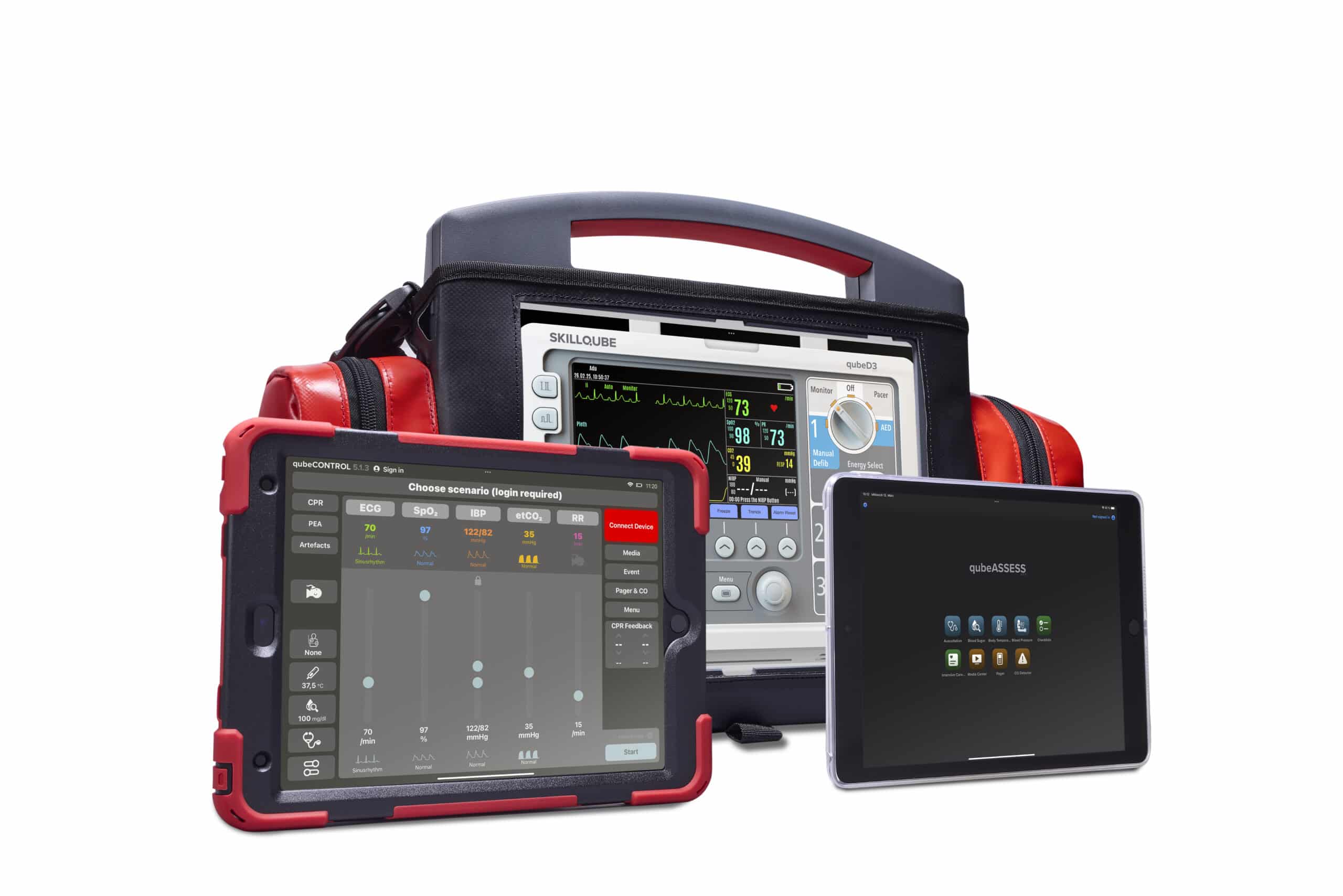
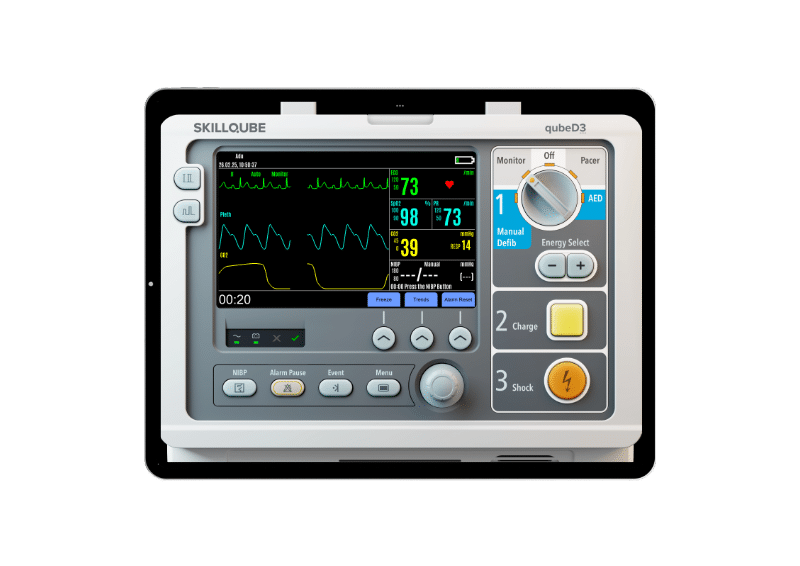
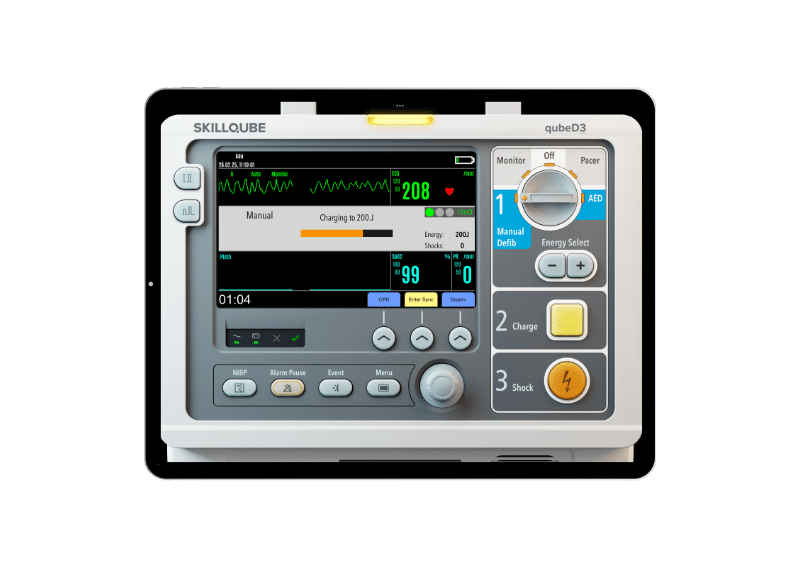
The qubeD3 is the first SKILLQUBE monitor surface of the Mindray brand and simulates the Mindray BeneHeart D3. Whether ECG monitoring, external pacing, cardioversion or AED training – the qubeD3 provides realistic, practical training conditions with intuitive operation via simulated buttons and controls.
Built for EMS services and hospitals that work with the Mindray BeneHeart D3 – so teams train on exactly the interface they use in real emergencies.

SCREENSHOTS
The qubeD3 software in action
-
qubeCONTROL
-
qubeASSESS
-
qubeCLOUD
-
Debriefing
-
Hardware
Everything under control
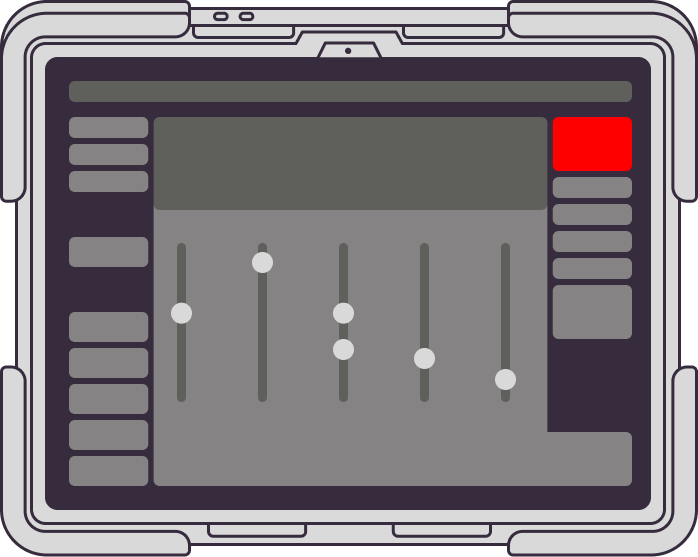
qubeCONTROL lets trainers steer and influence scenarios in real time. Sudden changes in the patient's condition create highly realistic stress situations that go far beyond a linear sequence. Thanks to qubeCLOUD, prepared scenarios can be loaded, played and adapted at any time.
- Full vital-sign control: ECG, SpO2, IBP, etCO2 and respiratory rate via sliders, incl. waveform libraries, trend times and instant transfer to the monitor.
- CPR: rhythm changes during CPR, manual CPR artefacts, PEA and a real-time CPR dashboard.
- Advanced diagnostics: 12-lead ECG quick selection, blood glucose, temperature, lab reports and auscultation.
- Scenario & system management: scenario control with phase view, qubeCLOUD sync and a clear connection centre.
- Documentation & alerting: pager alerting, media library, documentation of measures, CPR feedback and an automatic logbook.
More reality, less artificial practice
- Realistic start: pager alert and CO warner, just like a real mission.
- Examination: auscultation of heart, lungs and abdomen (front and back), blood glucose, body temperature and manual blood pressure.
- ICU monitor: ICP, PAP, BIS and CVP with waveforms plus further ventilation and haemodynamic values.
- Checklists: checklists such as the ABCDE scheme as a quick reference.
- Media center: the “printed” 12-lead ECG from the simulation monitor, lab reports, PDFs, images, videos and SOPs.

For the training of tomorrow
Create, manage and share realistic training scenarios in the browser. Prepare content with the integrated scenario editor – freestyle or scripted – and load it later via qubeCONTROL.
- Central management: devices, users and access rights in one place; SimConfig sets uniform parameters for all devices; pager texts, alarms, lab reports and SOPs are maintained and synchronised centrally.
- Ready-made cases: synchronise all available AHA cases and SKILLQUBE cases with one click, embed videos and documents.
- Education Center: e-learning courses and help, whenever you need them.
- Connected & secure: share scenarios with partner organisations; GDPR-compliant, no installation, on PC, tablet or smartphone.

Debriefing solution
Assessing the situation, giving precise instructions, communicating correctly: team communication and medical procedures have to be trained to make the right decisions in real operations.

Hardware Set "L"
- Hardcase L for the monitor iPad
- Bag with side, back and front pockets for accessories
- Monitor iPad Air 13"
- qubeCONTROL iPad 11" with protective cover
- qubeASSESS iPad 11" with protective cover
- Stationary Wi-Fi router
- Adult cable set: 4-pole ECG monitoring cable incl. 6-pole ECG diagnostic extension, finger SpO2 sensor, NIBP cuff, CO2 sensor, adult defibrillation pads, defib connection cable
- Paediatric cable set: NIBP cuff paediatric/neonatal, SpO2 sensor paediatric/neonatal, paediatric defibrillation pads
Durable, visually almost indistinguishable from a real defibrillator · Latest Apple devices